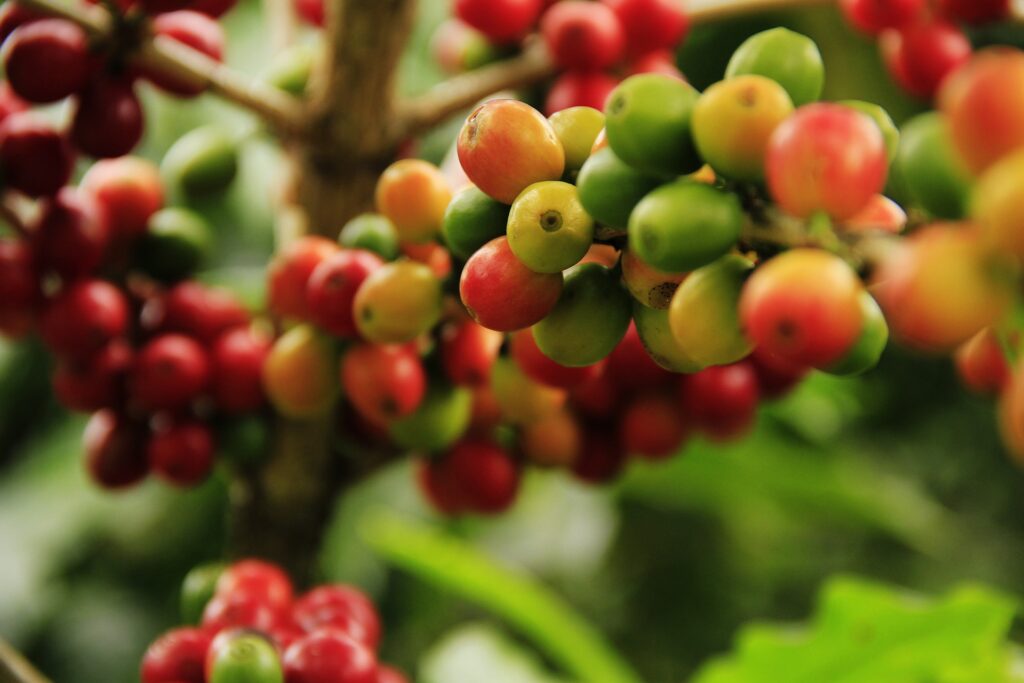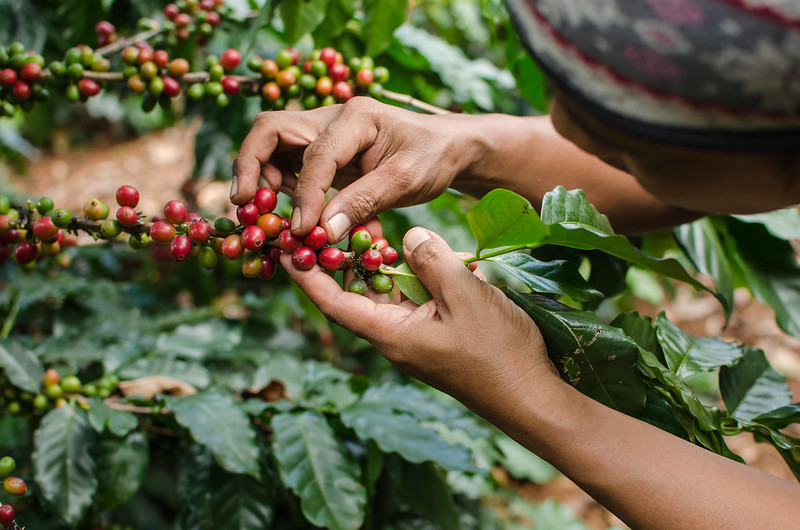
You can often hear people saying coffee is very much like wine. Where does this comparison stem from? Even the most rookie wine enthusiasts have heard about grape varieties and how they affect the taste of the drink. Coffee varieties are also very important and determine the taste of the brew.
The differences between coffee species and their popularity are no stranger even to a rookie coffee lover. The two most common coffee species are Arabica and Robusta. They make up most of the world’s coffee crops. The first one is noble and demanding, and of much higher quality (all specialty coffees are Arabica beans). The second one, Robusta, is less demanding cultivation-wise, but its quality is lower.
Now that we’re done with the intro, let’s dig deeper: coffee species, like many other plants in nature, have their own varieties. In this article, we will introduce you to the most popular varieties of Arabica, so that you can make even more informed decisions when buying specialty coffee.
Coffee varieties, or what is varietal
Botanical varieties (or varietals) are one of the basic botanical classifications of the coffee tree. Choosing the right varietal for the location of the crops is a key and difficult decision. The varieties of coffee in combination with the appropriate terroir make up the richness of the flavor notes in your cup.
Each varietal is characterized by a different sensory profile, the ability to adapt to given growing conditions, resistance to pests and, finally, high yielding potential. For this reason, only individual, characteristic botanical varieties that give the best results are grown in specific locations. Here are the most popular varieties of coffee that you can find in a packet of specialty beans.
Kenyan coffees are usually the SL 28, SL 32 and SL 34 varieties. Photo: Kenya from Bonanza Coffee, Berlin / photo by Marcin Rzońca
The most popular varieties of coffee beans
Typica: the oldest botanical variety of Arabica. Discovered in Yemen, transferred to India, and then to other parts of the world. It was created by a natural mutation, not by human actions. Sweet, clean and with a thick body.
Ethiopian heirloom: a mixture of different varietals, characteristic of Ethiopia. Due to the coffee production system in this country, it is very difficult to obtain beans of one botanical variety, almost always the mixtures of different varieties make up a specific terroir.
Bourbon: one of the most popular varietals in the world. It also mutated in a natural way. It has many varieties such as yellow, orange and red bourbon. Delicate, sweet and complex, it has become an icon of the coffee brew flavor all over the world. Demanding to grow, but the effect is worth the effort.
Caturra: a Bourbon mutation, the beans of this coffee variety are famous for their crisp acidity and delicate body. Less sweetness and clarity in the cup than in its predecessor. Initially grown in Brazil, it was then moved to Costa Rica, Colombia and Nicaragua.
Caturra and Red Catuai varietals from Costa Rican coffee / photo by Marcin Rzońca
Pacamara: citrus and floral notes, and a great balance usually create a great sensory profile in a cup of this varietal. The highest quality of this type of coffee usually goes hand in hand with the highest cultivation altitude.
SL28: the result of the work of scientists employed by the Kenyan government in the 1930s. Their goal was to create high yielding coffee varieties of high quality. While the former air was not entirely successful, the quality of these coffees is top notch. Vivid, intense acidity, sweetness and a complex profile have enjoyed unflagging popularity for years, giving Kenyan coffees a special place on the market.
SL34: another varietal created through lab experiments in Kenya. It differs from its predecessor with a fuller body and a slightly different flavor profile. This is just one of the many varieties of the 'SL’ type grown in Kenya.
Geisha: in recent years, this varietal has become a benchmark of the highest quality. Incredibly complex, full of tropical fruit notes, citrus, floral accents, and finally plums and chocolate. Coffees of this variety grown in Panama go for record prices at auctions and for many baristas are the key to success at the world championships. This type of coffee is being grown more and more often in other countries, such as Colombia.
Specialty coffees always contain information about the botanical variety on the packaging. The Danish La Cabra does not forget about this note. / photo by Marcin Rzońca
The above list of coffee bean varietals is just the tip of the iceberg formed by various botanical varieties of the coffee tree. Their number is constantly increasing as a result of intensive work in plantations and laboratories, all with the aim of providing more and more of the great coffee beans for us to enjoy every day. To make it worth your while, when shopping for specialty-quality coffee, check the label for coffee varieties and let your own taste buds tell the difference! You can find the varietals both among coffees for alternative brewing and among many good coffees for espresso.